Surf-Vorhersage Anchor Point, Taghazout
Taghazout · Pointbreak · Niedrig bis mittel · aktualisiert 18:00
Samstag, 24., 20:00
35
Poor
- Swell
- 0.9 m
- Periode
- 6.8 s
- Wind
- 6 km/h
- Wasser
- 20°
- Niedrigwasser
- 06:00
- Hochwasser
- 12:00
NNW · 328°
Kürzere Periode
ESE · offshore
2/2
next
after that
Die nächsten sieben Tage
Bester Tag der Woche ist Fr., 23. mit 37 von 100.
Open-Meteo · windows firm to Do., 22., a direction after that
Di., 20.
Today
27Poor
3–15 km/h0.7–0.8 m14–16 s14:00–16:00Mi., 21.
32Poor
1–10 km/h0.7–0.9 m12–14 s08:00–10:00Do., 22.
22Poor
2–8 km/h0.6–0.7 m9–11 s18:00–20:00Fr., 23.
37Poor
2–15 km/h0.8–0.9 m7–10 s07:00–09:00Sa., 24.
35Poor
3–9 km/h0.8–0.9 m7–10 s18:00–20:00So., 25.
35Poor
1–11 km/h0.7–1.0 m5–9 s11:00–13:00Mo., 26.
29Poor
4–9 km/h0.7–0.8 m8–10 s18:00–20:00
Stunde für Stunde, Samstag, 24.
Bestes Zeitfenster
20:00
Peak
35
27
25
28
27
35
Welle und Wertung
Periode, s
9
9
9
9
9
9
9
9
9
9
9
10
10
9
7
Welle, m
0.8
0.8
0.8
0.8
0.8
0.8
0.8
0.8
0.8
0.8
0.8
0.8
0.8
0.9
0.9
Wind, km/h
7 N
5 N
3 NW
3 W
4 W
6 W
8 W
9 WNW
9 NW
9 NW
9 NW
8 NNW
6 NNW
3 NNE
6 ESE
Tide
06
07
08
09
10
11
12
13
14
15
16
17
18
19
20
Über Anchor Point
Anchor Point ist die Welle, die Taghazout auf die Surfkarte gebracht hat: ein Rechts-Pointbreak, der nördlich des Dorfes an den Felsen entlangläuft, mit langen Wänden, die man bei gutem Winterswell mehrere hundert Meter surfen kann. Er braucht einen soliden Nordwest-Groundswell und läuft am besten etwa von Oktober bis März.
Es ist eine ernsthafte Welle. Ein- und Ausstieg gehen über Felsen, bei größeren Tagen zieht die Strömung, und die Take-off-Zone ist voll und umkämpft. Schau dir zuerst ein paar Sets von der Klippe an, plane deinen Weg rein und raus und respektiere die Locals im Line-up. Wenn du noch lernst, schau lieber von der Terrasse zu und surf Hash Point oder Panoramas.
Der Spot
Was er braucht, um zu laufen, und für wen er passt.
- Läuft am besten
- NW / W / WNW swell, 1.2–4.5 m
- Beste Tide
- Niedrig bis mittel
- Bester Wind
- E / SE / NE
- Level
- Fortgeschritten
- Wellentyp
- Pointbreak
- Ideal für
- right-hand point-break surfing · long walls · winter groundswell
Bevor du rauspaddelst
Lokales Wissen, das keine Wertung abbildet.
Andrang
Often heavily crowded when conditions are good. The main peak is competitive and best suited to confident intermediate and advanced surfers who understand point-break priority and local etiquette.
Einstieg
Rocky shoreline entry. Watch several sets before entering, identify the safest route and avoid paddling out unless you are comfortable around rocks and moving water.
Ausstieg
Plan your exit before paddling out. The rocky exit can become difficult with larger swell, current or changing tide. If unsure, watch experienced local surfers or go with a guide.
Achtung
Rocky entry and exit, strong current on larger swells, heavy crowds and a demanding takeoff. Not suitable for beginners.
Alternativen in der Nähe
Surflehrer, die hier surfen
Wo sie bricht - und wie du wieder rauskommst
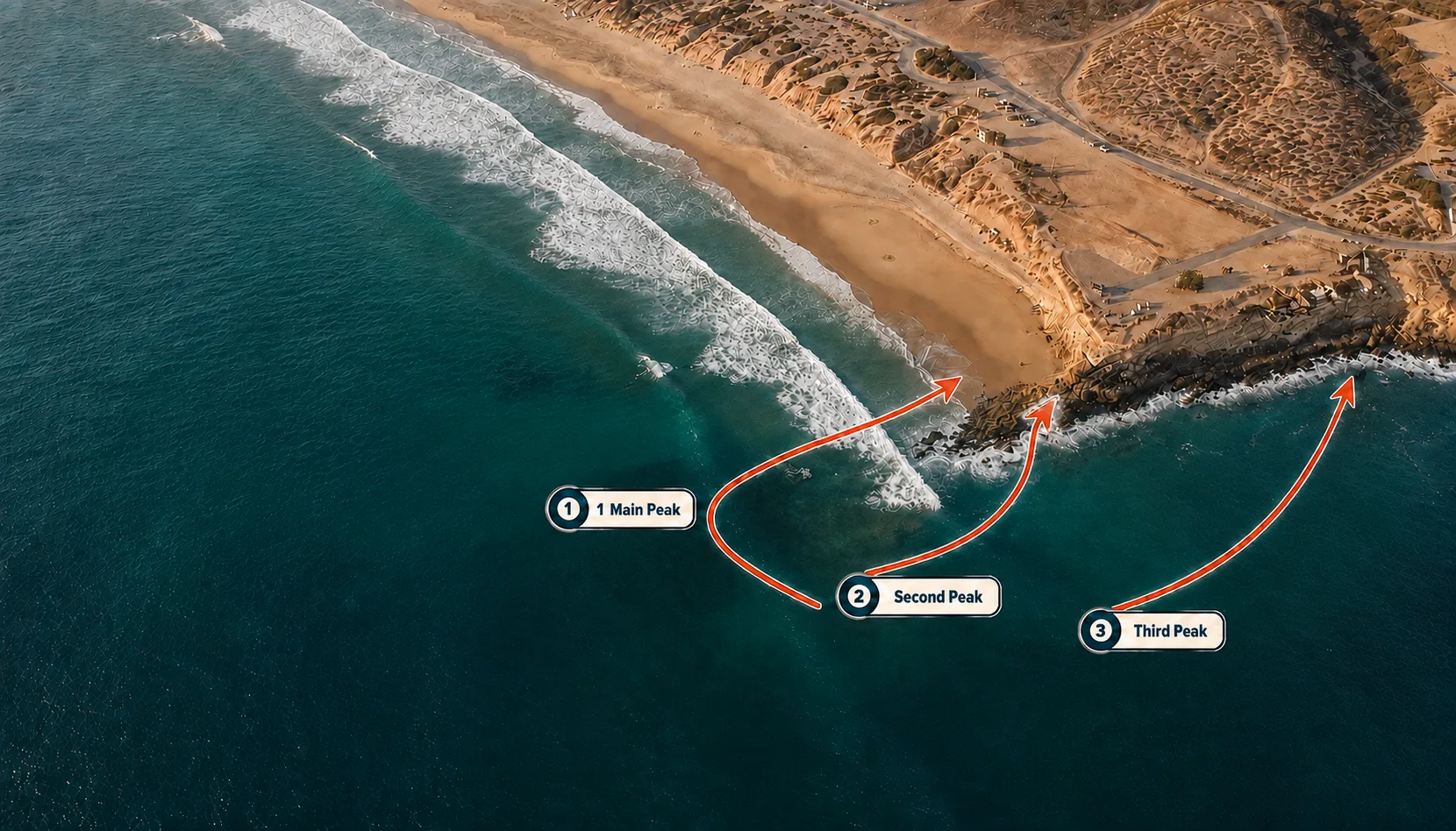
Die drei Ausstiege
Die Pfeile zeigen den Weg hinein
- 1The easy oneAny tideBeginner okLong paddle
Easy and safe, no rock work. The price is the paddle: you come all the way around into the bay.
- 2The short cutLow tide onlyTime the setsAct fast
The shortest way in, but it only works on low tide. Sync with the waves and move fast.
- 3The usual oneMost usedFind the right rockAct fast
Where most people get out. Pick the right rock to step on, sync with the waves, and act fast.
Die drei Peaks
- 1Local / main peakOn the inside, towards the bay.
- 2SecondThe middle section, off the tip of the point.
- 3ThirdFurthest up the point, where the wave stands up first.
Die Markierungen sind ungefähr. Gezeiten und Sandbänke verschieben sich - prüfe die Tide und schau erst ein paar Sets zu.