Previsión de surf en Anchor Point, Taghazout
Taghazout · Point break · Baja a media · actualizado 18:00
martes 20, 14:00
27
Poor
- Swell
- 0.8 m
- Periodo
- 14.8 s
- Viento
- 14 km/h
- Agua
- 20°
- Marea baja
- 02:00
- Marea alta
- 09:00
NW · 312°
Largo, mar de fondo
WNW · onshore
3/2
next
after that
Los próximos siete días
El mejor día de la semana es lun 19, con 45 sobre 100.
Open-Meteo · windows firm to mié 21, a direction after that
lun 19
Today
45Fair
4–17 km/h0.9–1.0 m11–18 s08:00–10:00mar 20
27Poor
3–15 km/h0.7–0.8 m14–16 s14:00–16:00mié 21
32Poor
1–10 km/h0.7–0.9 m12–14 s08:00–10:00jue 22
22Poor
2–8 km/h0.6–0.7 m9–11 s18:00–20:00vie 23
37Poor
2–15 km/h0.8–0.9 m7–10 s07:00–09:00sáb 24
35Poor
3–9 km/h0.8–0.9 m7–10 s18:00–20:00dom 25
35Poor
1–11 km/h0.7–1.0 m5–9 s11:00–13:00
Hora a hora, martes 20
Mejor ventana
14:00
Peak
27
23
24
27
27
27
Ola y puntuación
Periodo, s
16
16
16
16
15
15
15
15
15
15
15
15
15
14
14
Ola, m
0.7
0.7
0.8
0.8
0.8
0.8
0.8
0.8
0.8
0.8
0.8
0.8
0.8
0.8
0.8
Viento, km/h
8 NE
8 NE
7 NE
3 WSW
7 SW
9 SW
9 WSW
10 W
14 WNW
14 WNW
15 NW
15 NNW
11 N
9 NNE
8 ENE
Tide
06
07
08
09
10
11
12
13
14
15
16
17
18
19
20
Sobre Anchor Point
Anchor Point es la ola que puso a Taghazout en el mapa del surf: un point break de derechas que rompe a lo largo de las rocas al norte del pueblo, con paredes largas que se pueden surfear durante varios cientos de metros con un buen swell de invierno. Necesita un mar de fondo sólido del noroeste para despertar y está en su mejor momento más o menos de octubre a marzo.
Es una ola seria. La entrada y la salida son por rocas, la corriente tira en los días grandes y la zona de take-off está llena y es competitiva. Mira unas cuantas series desde el acantilado, elige tu camino de entrada y salida y respeta a los locales en el pico. Si todavía estás aprendiendo, mírala desde la terraza y surfea Hash Point o Panoramas.
El spot
Lo que necesita para funcionar y para quién es.
- Funciona mejor
- NW / W / WNW swell, 1.2–4.5 m
- Mejor marea
- Baja a media
- Mejor viento
- E / SE / NE
- Nivel
- Avanzado
- Tipo de ola
- Point break
- Ideal para
- right-hand point-break surfing · long walls · winter groundswell
Antes de entrar al agua
Conocimiento local que una puntuación no transmite.
Gente
Often heavily crowded when conditions are good. The main peak is competitive and best suited to confident intermediate and advanced surfers who understand point-break priority and local etiquette.
Entrada
Rocky shoreline entry. Watch several sets before entering, identify the safest route and avoid paddling out unless you are comfortable around rocks and moving water.
Salida
Plan your exit before paddling out. The rocky exit can become difficult with larger swell, current or changing tide. If unsure, watch experienced local surfers or go with a guide.
Ojo con
Rocky entry and exit, strong current on larger swells, heavy crowds and a demanding takeoff. Not suitable for beginners.
Alternativas cercanas
Instructores que surfean aquí
Dónde rompe, y por dónde se sale
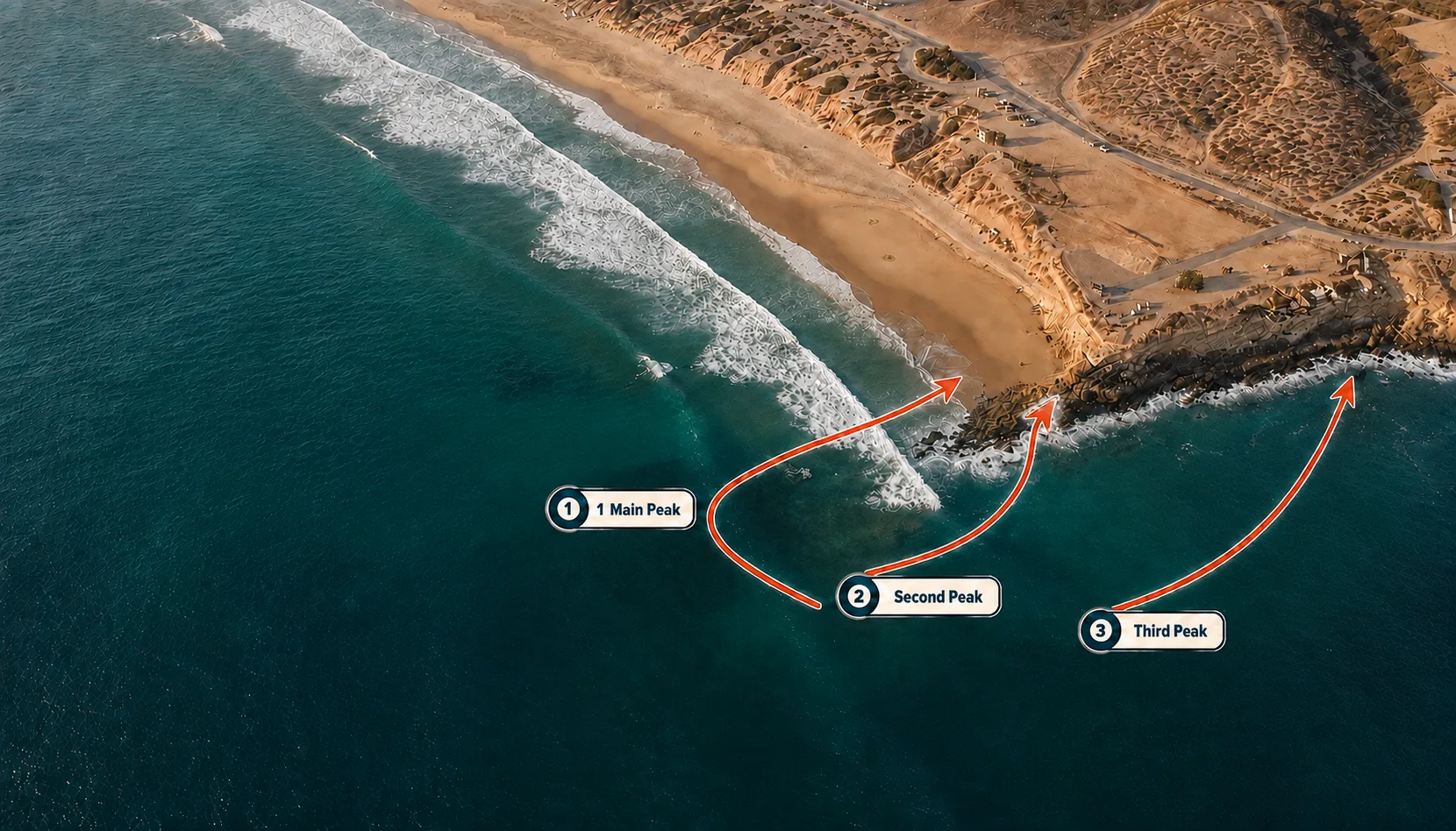
Las tres salidas
Las flechas indican por dónde entrar
- 1The easy oneAny tideBeginner okLong paddle
Easy and safe, no rock work. The price is the paddle: you come all the way around into the bay.
- 2The short cutLow tide onlyTime the setsAct fast
The shortest way in, but it only works on low tide. Sync with the waves and move fast.
- 3The usual oneMost usedFind the right rockAct fast
Where most people get out. Pick the right rock to step on, sync with the waves, and act fast.
Los tres picos
- 1Local / main peakOn the inside, towards the bay.
- 2SecondThe middle section, off the tip of the point.
- 3ThirdFurthest up the point, where the wave stands up first.
Las marcas son aproximadas. Las mareas y los bancos de arena cambian: comprueba la marea y mira pasar unas cuantas series antes de meterte.