Prévisions surf à Anchor Point, Taghazout
Taghazout · Point break · Basse à mi-marée · mis à jour 18:00
vendredi 23, 09:00
37
Poor
- Houle
- 0.9 m
- Période
- 9.1 s
- Vent
- 3 km/h
- Eau
- 20°
- Marée basse
- 05:00
- Marée haute
- 11:00
NNW · 328°
Période plus courte
W · onshore
2/2
next
after that
Les sept prochains jours
Le meilleur jour de la semaine est ven. 23, avec 37 sur 100.
Open-Meteo · windows firm to jeu. 22, a direction after that
mar. 20
Today
27Poor
3–15 km/h0.7–0.8 m14–16 s14:00–16:00mer. 21
32Poor
1–10 km/h0.7–0.9 m12–14 s08:00–10:00jeu. 22
22Poor
2–8 km/h0.6–0.7 m9–11 s18:00–20:00ven. 23
37Poor
2–15 km/h0.8–0.9 m7–10 s07:00–09:00sam. 24
35Poor
3–9 km/h0.8–0.9 m7–10 s18:00–20:00dim. 25
35Poor
1–11 km/h0.7–1.0 m5–9 s11:00–13:00lun. 26
29Poor
4–9 km/h0.7–0.8 m8–10 s18:00–20:00
Heure par heure, vendredi 23
Meilleur créneau
09:00
Peak
37
34
37
35
34
28
29
Vagues et note
Période, s
9
9
9
9
9
9
9
9
9
9
9
10
10
9
7
Vague, m
0.9
0.9
0.9
0.9
0.9
0.9
0.9
0.9
0.9
0.9
0.9
0.8
0.8
0.8
0.8
Vent, km/h
8 NE
6 NE
2 N
3 W
5 WSW
8 WSW
10 WSW
11 W
13 WNW
15 WNW
13 NW
10 NW
8 NW
6 NNW
7 NNE
Tide
06
07
08
09
10
11
12
13
14
15
16
17
18
19
20
À propos d’Anchor Point
Anchor Point est la vague qui a mis Taghazout sur la carte du surf : un point break de droite qui déroule le long des rochers au nord du village, avec de longs murs que l'on peut surfer sur plusieurs centaines de mètres par une bonne houle d'hiver. Il lui faut une solide houle de nord-ouest pour se réveiller, et il est à son meilleur d'octobre à mars environ.
C'est une vague sérieuse. L'entrée et la sortie se font sur les rochers, le courant tire les jours de taille et la zone de take-off est chargée et compétitive. Observez quelques séries depuis la falaise, choisissez votre chemin d'entrée et de sortie, et respectez les locaux au line-up. Si vous apprenez encore, regardez depuis la terrasse et surfez plutôt Hash Point ou Panoramas.
Le spot
Les conditions qu’il lui faut, et pour qui il convient.
- Fonctionne le mieux
- NW / W / WNW swell, 1.2–4.5 m
- Meilleure marée
- Basse à mi-marée
- Meilleur vent
- E / SE / NE
- Niveau
- Confirmé
- Type de vague
- Point break
- Idéal pour
- right-hand point-break surfing · long walls · winter groundswell
Avant d’aller à l’eau
Le savoir local qu’une note ne dit pas.
Affluence
Often heavily crowded when conditions are good. The main peak is competitive and best suited to confident intermediate and advanced surfers who understand point-break priority and local etiquette.
Entrée
Rocky shoreline entry. Watch several sets before entering, identify the safest route and avoid paddling out unless you are comfortable around rocks and moving water.
Sortie
Plan your exit before paddling out. The rocky exit can become difficult with larger swell, current or changing tide. If unsure, watch experienced local surfers or go with a guide.
Attention à
Rocky entry and exit, strong current on larger swells, heavy crowds and a demanding takeoff. Not suitable for beginners.
Spots alternatifs à proximité
Moniteurs qui surfent ici
Où ça casse, et par où sortir
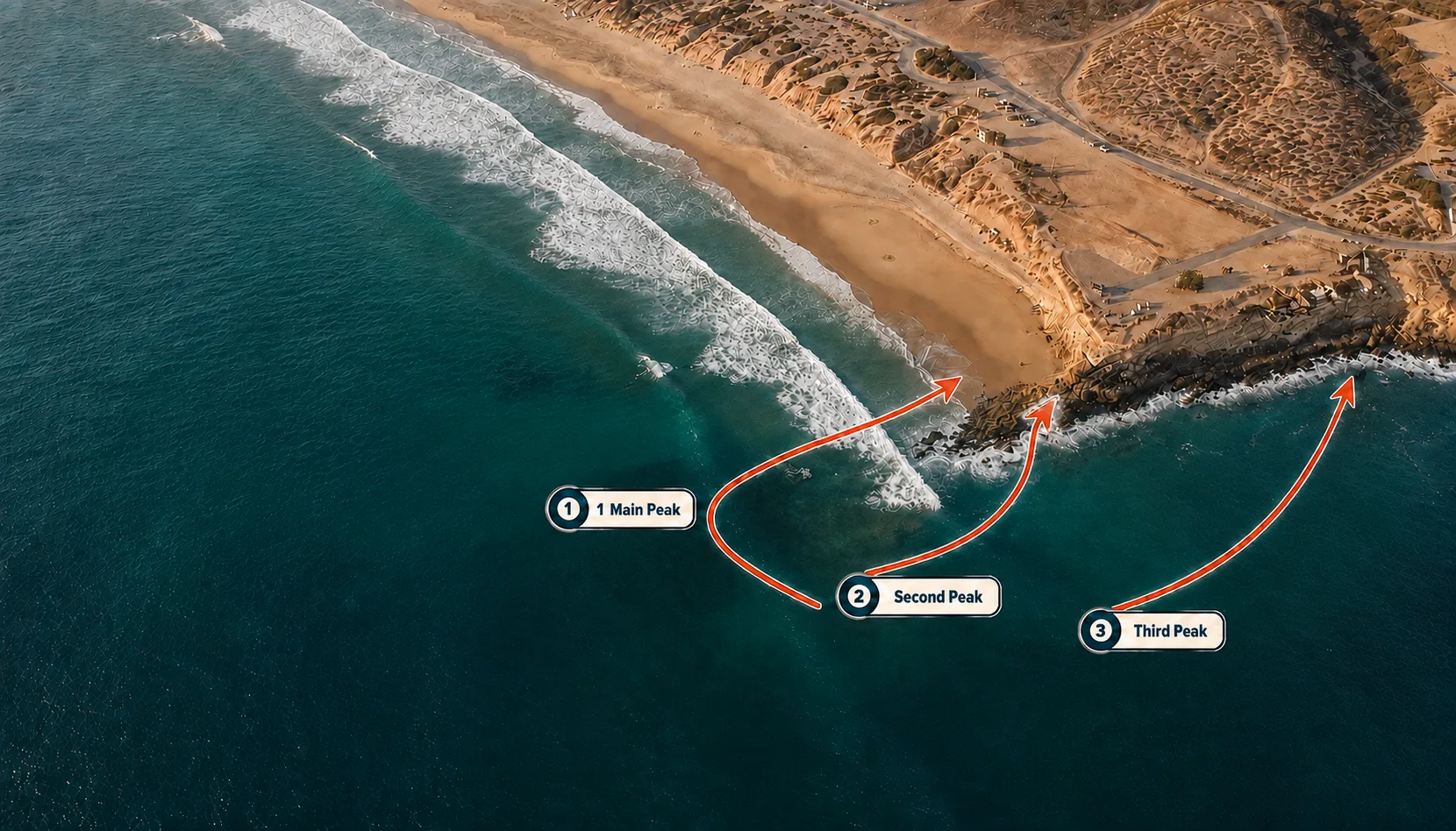
Les trois sorties
Les flèches indiquent le chemin pour entrer
- 1The easy oneAny tideBeginner okLong paddle
Easy and safe, no rock work. The price is the paddle: you come all the way around into the bay.
- 2The short cutLow tide onlyTime the setsAct fast
The shortest way in, but it only works on low tide. Sync with the waves and move fast.
- 3The usual oneMost usedFind the right rockAct fast
Where most people get out. Pick the right rock to step on, sync with the waves, and act fast.
Les trois pics
- 1Local / main peakOn the inside, towards the bay.
- 2SecondThe middle section, off the tip of the point.
- 3ThirdFurthest up the point, where the wave stands up first.
Les repères sont approximatifs. Les marées et les bancs de sable bougent : vérifiez la marée et regardez passer quelques séries avant de vous lancer.