Anchor Point surf forecast, Taghazout
Taghazout · Pointbreak · Low to mid · updated 18:00
23 Friday, 09:00
37
Poor
- Swell
- 0.9 m
- Period
- 9.1 s
- Wind
- 3 km/h
- Water
- 20°
- Low tide
- 05:00
- High tide
- 11:00
NNW · 328°
Shorter period
W · onshore
2/2
next
after that
The next seven days
Best of the week is 19 Mon at 45 out of 100.
Open-Meteo · windows firm to 21 Wed, a direction after that
19 Mon
Today
45Fair
4–17 km/h0.9–1.0 m11–18 s08:00–10:0020 Tue
27Poor
3–15 km/h0.7–0.8 m14–16 s14:00–16:0021 Wed
32Poor
1–10 km/h0.7–0.9 m12–14 s08:00–10:0022 Thu
22Poor
2–8 km/h0.6–0.7 m9–11 s18:00–20:0023 Fri
37Poor
2–15 km/h0.8–0.9 m7–10 s07:00–09:0024 Sat
35Poor
3–9 km/h0.8–0.9 m7–10 s18:00–20:0025 Sun
35Poor
1–11 km/h0.7–1.0 m5–9 s11:00–13:00
Hour by hour, 23 Friday
Best window
09:00
Peak
37
34
37
35
34
28
29
Wave and score
Period, s
9
9
9
9
9
9
9
9
9
9
9
10
10
9
7
Wave, m
0.9
0.9
0.9
0.9
0.9
0.9
0.9
0.9
0.9
0.9
0.9
0.8
0.8
0.8
0.8
Wind, km/h
8 NE
6 NE
2 N
3 W
5 WSW
8 WSW
10 WSW
11 W
13 WNW
15 WNW
13 NW
10 NW
8 NW
6 NNW
7 NNE
Tide
06
07
08
09
10
11
12
13
14
15
16
17
18
19
20
About Anchor Point
Anchor Point is the wave that put Taghazout on the surf map: a right-hand point break that peels along the rocks north of the village, with long walls you can ride for a few hundred metres on a good winter swell. It needs a solid north-west groundswell to wake up, and it is at its best from about October to March.
It is a serious wave. Entry and exit are over rocks, the current pulls on bigger days and the take-off zone is crowded and competitive. Watch a few sets from the cliff first, pick your route in and out, and respect the locals in the line-up. If you are still learning, watch from the terrace and surf Hash Point or Panoramas instead.
The spot itself
What it needs to work, and who it works for.
- Works best
- NW / W / WNW swell, 1.2–4.5 m
- Best tide
- Low to mid
- Best wind
- E / SE / NE
- Level
- Advanced
- Break
- Pointbreak
- Best for
- right-hand point-break surfing · long walls · winter groundswell
Before you paddle out
Local knowledge that a score cannot carry.
Crowd
Often heavily crowded when conditions are good. The main peak is competitive and best suited to confident intermediate and advanced surfers who understand point-break priority and local etiquette.
Entry
Rocky shoreline entry. Watch several sets before entering, identify the safest route and avoid paddling out unless you are comfortable around rocks and moving water.
Exit
Plan your exit before paddling out. The rocky exit can become difficult with larger swell, current or changing tide. If unsure, watch experienced local surfers or go with a guide.
Watch for
Rocky entry and exit, strong current on larger swells, heavy crowds and a demanding takeoff. Not suitable for beginners.
Nearby alternatives
Instructors who surf here
Where it breaks, and how you get out
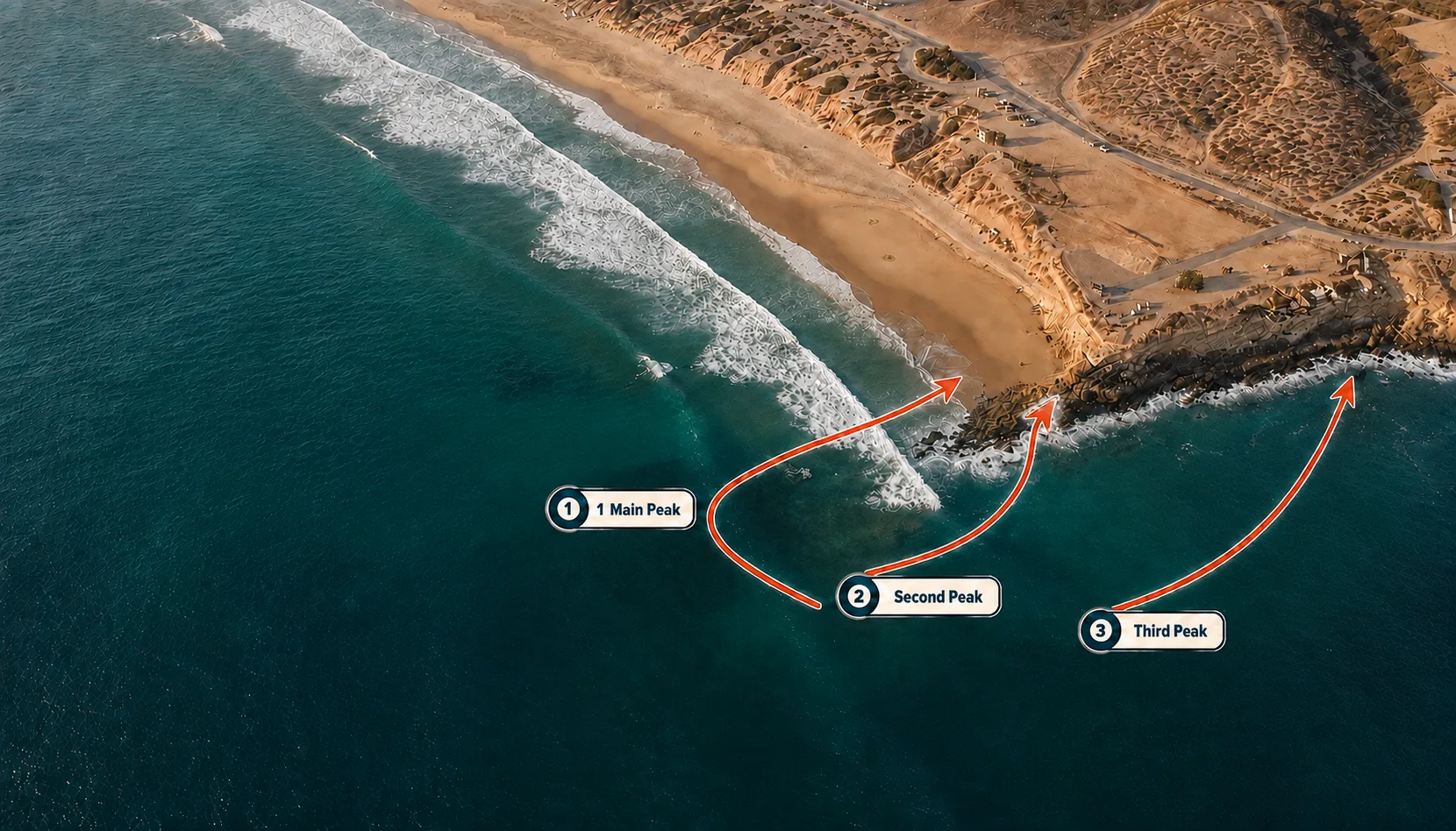
The three exits
Arrows point the way you come in
- 1The easy oneAny tideBeginner okLong paddle
Easy and safe, no rock work. The price is the paddle: you come all the way around into the bay.
- 2The short cutLow tide onlyTime the setsAct fast
The shortest way in, but it only works on low tide. Sync with the waves and move fast.
- 3The usual oneMost usedFind the right rockAct fast
Where most people get out. Pick the right rock to step on, sync with the waves, and act fast.
The three breaks
- 1Local / main peakOn the inside, towards the bay.
- 2SecondThe middle section, off the tip of the point.
- 3ThirdFurthest up the point, where the wave stands up first.
Marks are approximate. Tides and sandbanks move, so check the tide and watch a few sets before you commit.